

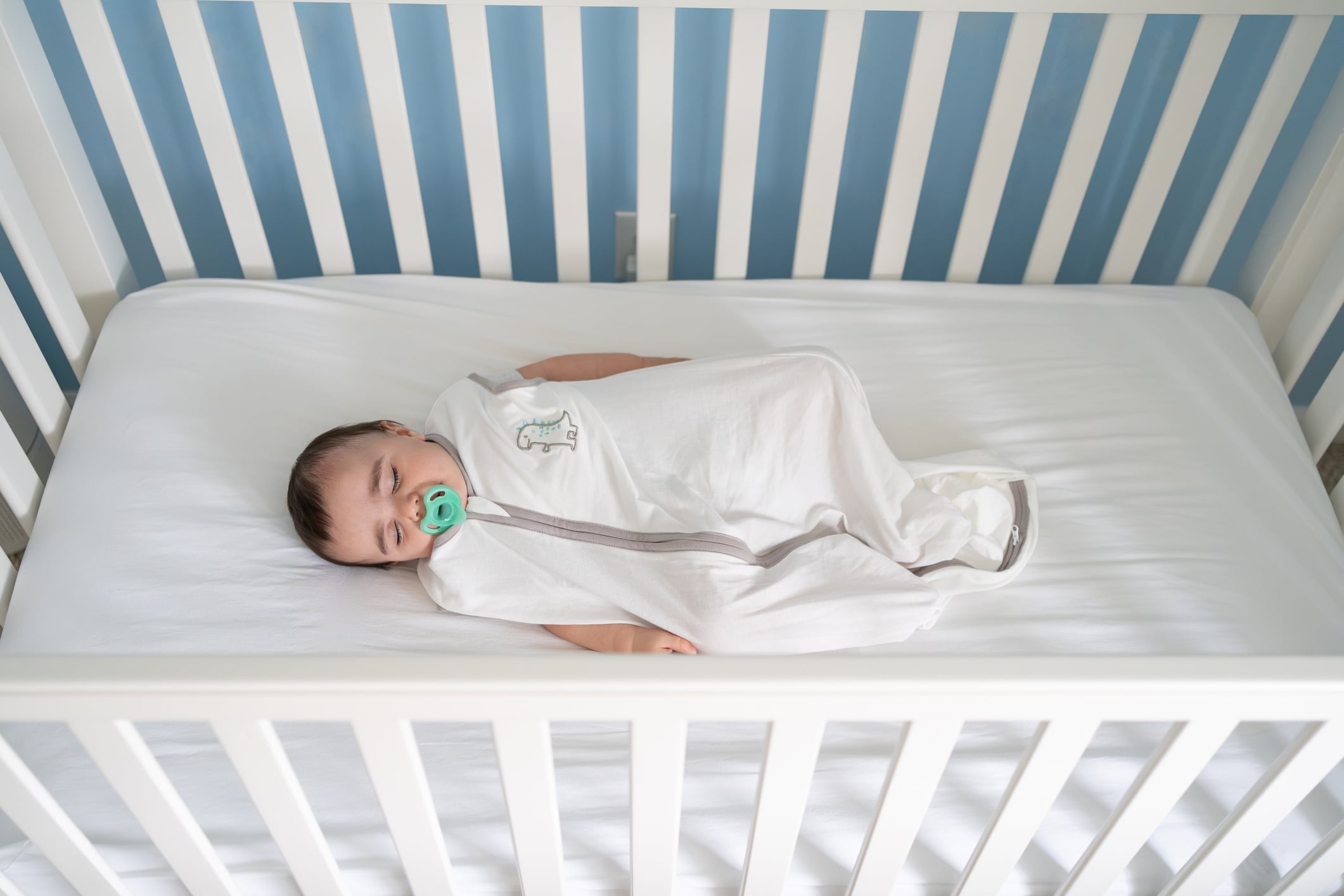
In the United States, 3,500 infants every year between the ages of 1 month and 1 year die tragically while sleeping from sudden infant death syndrome or sudden unexpected infant death, according the National Library of Medicine.
The University of Alabama at Birmingham Hospital has been certified for the next five years as a Safe Sleep Hospital through Crib for Kids’ National Safe Sleep Hospital Certification Program, reflecting its commitment to maintaining safe sleep practices within the hospital and after a baby’s discharge.
To help extend these practices into the home, Erinn Schmit, M.D., associate professor in the UAB Department of Pediatrics and pediatrician at Children’s of Alabama, and Freda Centor, advanced nursing coordinator with UAB Women and Infants Services, share recommendations on how to ensure safe infant sleep outside the hospital setting.
Position and environment
Location and surroundings can play a large role in how safe an infant’s sleep is. According to Centor, babies should always be put on their backs to sleep.
“Babies will not choke sleeping on their backs, but sleeping on their side or tummy is dangerous,” Centor said.
Babies should sleep alone in a crib, bassinet or play yard. Sharing a bed with an adult or another child can cause infant death by suffocation or strangulation. Loose items in bed also pose a risk.
“There should be no extra items in the sleep space, including pillows, stuffed animals, positioners, loose blankets or bumpers, as all of these can pose suffocation risks,” Schmit said.
Safe sleep
According to the American Academy of Pediatrics, infants need to have their own sleep space, such as a crib or bassinet, for the first year; but sharing a room with the baby is recommended for at least the first six months.
“One of the biggest risk factors for SIDS is being age 6 months or younger,” Schmit said. “Co-sleeping, or sharing a bed with another person, is especially dangerous with this younger age group.”
Breastfeeding is typically established around three weeks. After this, a pacifier is recommended to reduce the risk of SIDS, according to Centor. After nighttime feeds, babies should always go back in their own sleep area.
It is essential to maintain a comfortable temperature, about 68-70 degrees Fahrenheit, to ensure the baby does not overheat. Babies need to sleep on a flat surface. If the infant’s head falls forward while asleep on an incline, they may not have the strength to lift it up, which can lead to suffocation.
“If an infant falls asleep in a car seat or stroller, caregivers should move them to a flat surface as soon as possible,” Centor said.
Tips for parents
Parents should be aware of the AAP’s safe sleep recommendations and practice them for every sleep session, including naps and nighttime.
“In addition to parents, babysitters, grandparents and childcare centers should also be following the ABCs (alone, back, crib) of safe sleep,” Schmit said.
An often-overlooked strangulation risk is cords, including chargers, wires connected to video monitors, strings on window coverings and more. Cords that could potentially lead to strangulation should be well out of reach of the crib. Parents and caregivers should avoid products that claim to reduce SIDS risk.
More information is available on the UAB Medicine’s website, which provides a comprehensive list of safe sleep recommendations for infants.