

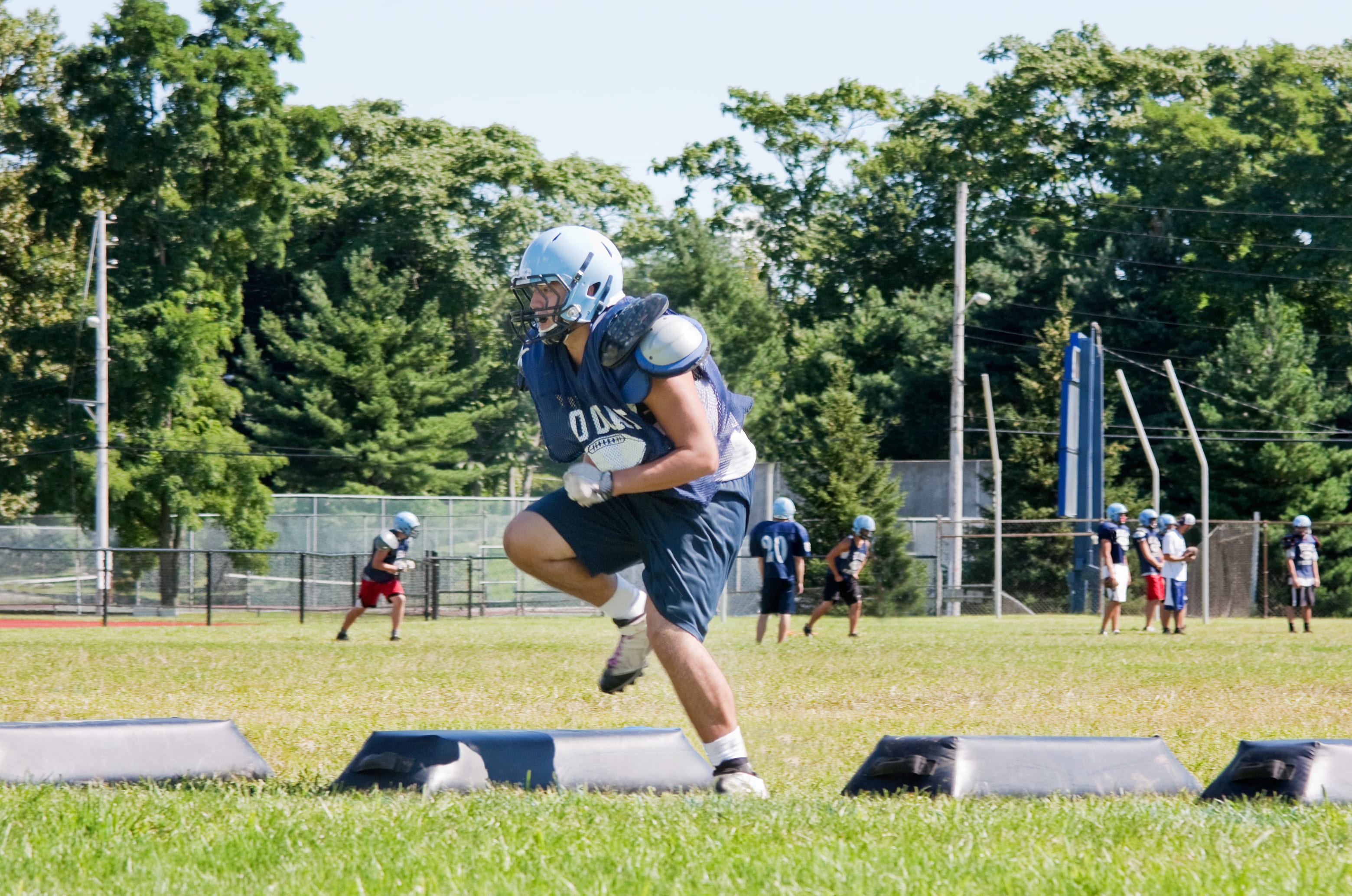
Student-athletes playing football, volleyball, soccer and cross country are preparing to return to early mornings and late nights filled with training, schoolwork and practices.
The transition from summer fun back into the school year athletic grind can be challenging if student-athletes are not prepared. Sports and exercise medicine physicians at the University of Alabama at Birmingham are offering tips to students, coaches and parents on ways to keep student-athletes healthy and safe this fall sports season.
Gradual ramp-ups to avoid injury
A summer break can present many challenges to an athlete returning to their sport. However, student-athletes should never jump straight back into high-intensity workouts, maximum weightlifting and full speed training if they have not been conditioning over the summer.
Amit Momaya, M.D., chief of UAB Sports and Exercise Medicine, Department of Orthopaedic Surgery, says athletes should progressively rebuild fitness, strength and endurance to reduce injury risk and prepare for competition.
“Returning back to the heaviest weight you can lift or the most intense loads of running or muscle activation can be dangerous to a body that has been stagnant,” Momaya said. “This is more relative for high school athletes who may have taken the summer off.”
Atrophy is the diminishing of the muscles or cells. The muscle loss process can take place a lot faster than it does to gain muscles. Many athletes can see a reduction in strength after just a few weeks of inactivity. During a summer of inactivity, some athletes may also experience weight gain that can work adversely to their performance.
“It is important to recognize that there must be a ramp-up period for the athlete if that is the case,” Momaya said. “Attempting to hit a personal record or even manage the same load after months of not as intense training can cause serious injury.”
Momaya says conditioning should prioritize body awareness and meet the athlete where they are.
“Coaches must assess their athletes and be cognizant of where they are physically,” Momaya said. “There is also a responsibility on the athlete to listen to their body and make safe decisions.”
For college athletes and students who may have continued training over the summer, Momaya says maintenance is often an unsuspecting antagonist for those gains.
“In a busier schedule that comes with an academic school year, the challenge becomes maintaining what was built over the summer going into the competition season,” Momaya said.
Momaya encourages coaches, parents and students to maintain awareness for the traditional things that can endanger an athlete in their peak health: heat and concussions.
“No matter the state of the athlete, heat can still take a toll,” Momaya said. “Hydration supports athletic performance and overall safety.”
Dehydration can directly impact the muscles, taking a toll on strength and performance quality.
Nutrition and hydration matter
Food plays a large role in the body’s ability to function properly. Whether at the high school or college level, it is important that parents and coaches encourage their student-athletes to eat food that is going to fuel their play and enrich their well-being.
Caroline Cohen, Ph.D., a clinical dietitian and assistant professor in the University of Alabama at Birmingham Department of Family and Community Medicine, says student-athletes have unique nutrient needs because they are significantly more active than their peers.
“A balanced diet with adequate kcal and appropriate macronutrient distribution can give athletes the ‘edge’ they need to go from performing just adequately to reaching their maximum potential,” Cohen said. “Optimizing nutrition boosts sports performance and aids in injury-prevention and recovery, immune function, and academic performance.”
High-intensity workouts and long practices call for attention to detail with every meal, especially considering outdoor sports that have the pressure of the sun involved.
“A plate that has approximately equal amounts of protein, carbohydrate and color is most appropriate, with more carbohydrates needed as training increases during the season and with competition and games,” Cohen said. “It is also imperative that athletes who are training outside during the summer months make a plan related to their hydration habits.”
Sweating increases the risk of dehydration. Athletes must take note of the amount of fluid they are taking in. Sports medicine physicians often encourage athletes to pay attention to the color of their urine as this could also indicate their hydration levels. Feelings of thirst and dry mouth are also key indicators.
Cohen said, “We routinely recommend drinking about 16-24 fluid ounces per pound of sweat loss, as we know that losing more than 2 percent of body weight impairs sports performance.”