

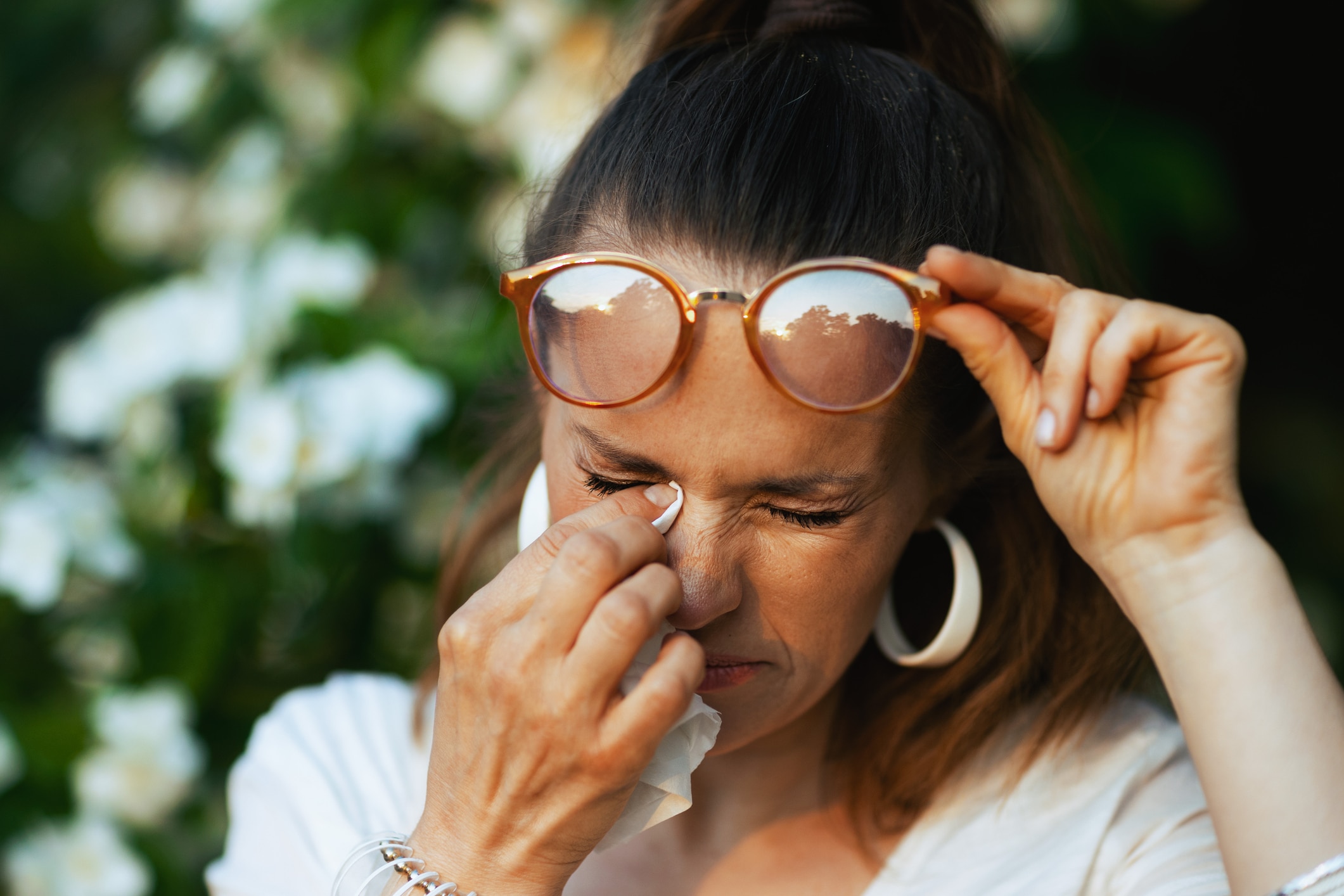
Pollen creates an inflammatory reaction that triggers histamines. Histamines are an immune cell response chemical that is released when the body is exposed to certain foreign substances. Histamines are what trigger allergic reactions and spring allergy symptoms such as sneezing, runny nose, and itchy or watery eyes.
Marissa Locy, O.D., an optometrist and assistant professor in the University of Alabama at Birmingham Department of Ophthalmology and Visual Sciences, explains what these symptoms may indicate and offers tips to help mitigate eye issues during allergy season.
Common misconceptions about allergies
Watery and dry eyes are not mutually exclusive. In fact, watery eyes are often a symptom of dry eye. When the eye begins to water or produce excess tears, it is the brain’s response to perceived dryness on the surface of the cornea. Pollen can also cause the eyes to water after histamines are released and localized to that part of the body.
“In the eyes, histamines cause inflammation that may lead to redness, watering, irritation, itching, light sensitivity and sometimes blurred vision,” Locy said. “If you experience these symptoms only around this time of year, it is likely an indicator for common seasonal allergies.”
Locy notes that dry eye is a chronic condition. While dry eye symptoms occur seasonally for some, many experience persistent dry eye throughout the year. For those who experience more severe dry eye year-round, this is indicative of a more long-lasting condition. Dry eyes may result from environmental or systemic factors, medication side effects, or contact lens use. These symptoms of dry eye often include watery eyes, a gritty or foreign body sensation, redness, burning, and blurred or fluctuating vision.
“Dry eye is a condition we treat and offer guidance for all year,” Locy said. “However, there is always a notable uptick of patients with eye irritation during the spring months due to allergy season.” Being able to distinguish dry eye from allergies is crucial in determining an appropriate treatment regimen.
How to relieve symptoms of pollen allergies
To reduce pollen exposure to the eyes, Locy suggests monitoring lifestyle and environmental exposures like staying indoors during peak allergy season, washing your hands and face when coming in from outdoors, changing clothes after extended time outdoors, and using an air purifier. Locy recommends monitoring detergents, lotions, etc. for potential allergens and avoiding eye rubbing.
While there are practical steps to reduce pollen and allergen exposure, Locy says patients may also benefit from a range of over-the-counter and prescription eye drops and oral medications, many of which contain antihistamines or mast cell stabilizers. Topical, allergy-specific eye drops are often a first-line option for individuals experiencing seasonal symptoms localized to the eyes.
“If over‑the‑counter allergy drops don’t help, it may be time to look at a prescription treatment,” Locy said.
Cool compresses are another suggested remedy to soothe eyes irritated from allergies. Avoid rubbing the eyes to further increase irritation. However, for eyes more prone simply to dryness, Locy says a warm compress can be an effective tool.
Locy emphasizes the importance of consulting an eye care provider before starting any allergy treatment, noting that some therapies may worsen existing eye conditions.
“Patients who have already been diagnosed with dry eye should be aware that many allergy treatments can increase dryness,” Locy said. “Even eye drops branded to relieve redness may temporarily get the red out, but often can result in worsening of symptoms.”
It is important to distinguish allergy-related eye irritation or dry eye from an infection or underlying inflammation within the eye. Locy notes that eye infections are often accompanied by mucous or purulent discharge, increased light sensitivity, pain or tenderness, and blurred vision. If you are experiencing any of these symptoms, it is important to seek guidance from an eye doctor.